Benefits of Art Therapy for Seniors
Art therapy is a powerful tool for emotional, physical, spiritual and mental wellbeing. It can be used to enhance one’s quality of life and achieve better coping strategies for our everyday lives. It can help in recovery from trauma, illness or help alleviate stress, anxiety or depression (Buchalter, 2011).
The new quality benchmarks encourage innovation, excellence and continuous improvement.
Through the advances in brain imaging technology we now have an insight into what is happening in a person during and after the art making experience. Brain functions such as memory, self-regulation, relaxation, and spatial-temporal and visual processing become activated when people are creating art (Kapitan 2014).
The art making process challenges people to think creatively and to problem solve which helps to stimulate healthy brain activity and keep our minds sharp, making it an ideal activity for older people. These light physical activities provide an opportunity for increased motor skills and coordination as well. Some studies even suggest that art may reduce the rate of development of conditions such as Alzheimer’s disease.
Art making aids in problem solving and concentration, it can encourage a sense of purpose and a reason to strive, learn and grow, it boosts self-esteem through successful completion of and enjoyment of the artwork as well as through the mastery of skills (Malchiodi, 2007).
The respectful interactions between the members of the art group encourages closeness and a feeling of connection and community giving a sense of emotional wellbeing.
My experience as an artist and art therapist has deepened my appreciation of the potential of art making to transform, to heal, to give joy, to nourish, to unify and to inspire us.
(Linda Pratt – Art Therapist)
References:
Buchalter, S. 2011. Art Therapy and Creative Coping Techniques for Older Adults. Jessica Kingsley Publishers, UK & USA.
Malchiodi, C. 2007. The Art Therapy Sourcebook. McGraw-Hill, N.Y. USA.
Kapitan, Lynn, Ed (2014). Introduction to the Neurobiology of Art Therapy: Evidence Based, Complex, and Influential. Art Therapy: Journal of the American Art Therapy Association, 31:2, 50-51, DOI: 10.1080/07421656.2014.911027
To summarise the benefits of Art Therapy:
Improved Memory
Going to museums, painting, sculpting, and many other types of art therapy are hugely helpful and can actually help people with memory loss. In fact, the Alzheimer’s Disease Centre in the United States believes that art therapy gets through to people with Alzheimer’s by exploiting parts of the brain with the least impairment. This can have a profound impact on their ability to access their memories.
Reduced Pain
Many seniors are impacted by arthritis, hypertension, and other pain. Art therapy is naturally relaxing and can help reduce stiffness and inflammation. Seniors are using their arms and fingers for art, and while this is light physical activity, it’s consistent, and can help promote better dexterity and blood flow. By using small, purposeful movements, they benefit from increased coordination and can more easily ignore their pain since they’re focused on their art.
Reduced Stress
Art therapy can reduce stress for people of all ages, but it’s particularly helpful for seniors and people with the early stages of memory loss. We have around 60,000 thoughts a day and many of these can be negative for people dealing with aging, so art therapy is particularly helpful. That’s because when seniors are engaged with an art therapy activity, they’re often ‘in the zone’ and can enjoy an almost meditative experience. This sense of wellbeing can greatly reduce anxiety and stress in seniors.
Reduced Depression
Seniors struggling with health implications, memory loss, or mobility problems will commonly experience depression. When they create art, the symptoms of depression are often reduced due to mood and cognitive stimulation. Even seniors who have problems communicating verbally can still express their thoughts and feelings through their art.
Increased Communication and Socialisation
By getting involved in art projects, seniors can find it easier to connect with others, reducing the feelings of isolation and loneliness that are common in the twilight years. Many people who have dementia / Alzheimer’s can find it difficult to express themselves and communicate with others, and art therapy can help them do this by providing a visual means of communication.
Relief from Chronic Conditions
Growing older can be very difficult for some people, particularly people living with Parkinson’s, Alzheimer’s, multiple sclerosis, arthritis, dementia, or are currently recovering from a stroke.
Dealing with these conditions and the limited mobility that can occur can sometimes be overwhelming. But art activities and crafts projects can provide some relief for these conditions. This can range from painting to pottery, games to puzzles. Colouring projects, scrapbooking, and other activities give seniors something to look forward to, while taking their minds off their condition.
Improved Brain Function
As we age, so do our brains. This can make it difficult to carry out some tasks- particularly when living with dementia / Alzheimer’s. Art therapy for adults can help boost these cognitive functions, improving senior’s abilities to use logic and reasoning, problem solve, focus on tasks for a sustained period of time, and improve working memory.
Art therapy can make a massive difference when it comes to both the mental and physical health of seniors.
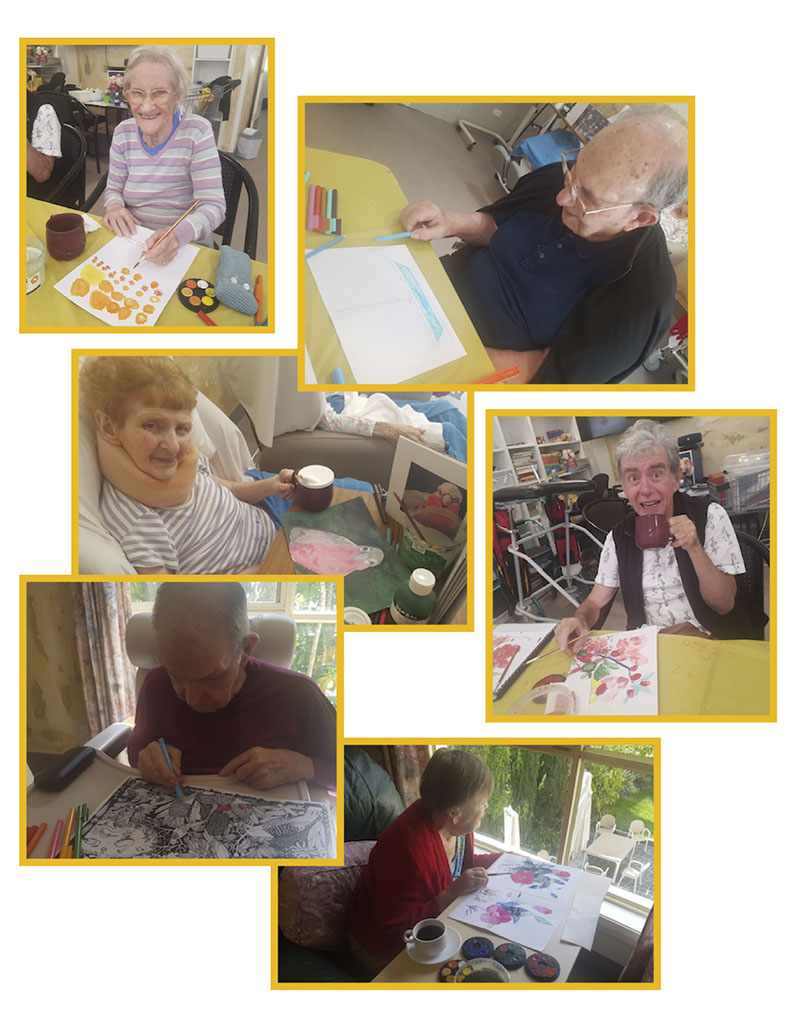
Some of our residents enjoying Art Therapy with paints, crayons, colouring pens and of course a cup of coffee.